
Dental Implants for Seniors, Downey, CA
Am I Too Old for Dental Implants?
No. I place implants in patients in their 70s and 80s every week. What decides it isn’t your age, it’s your medications, the bone on your scan, and your hygiene.
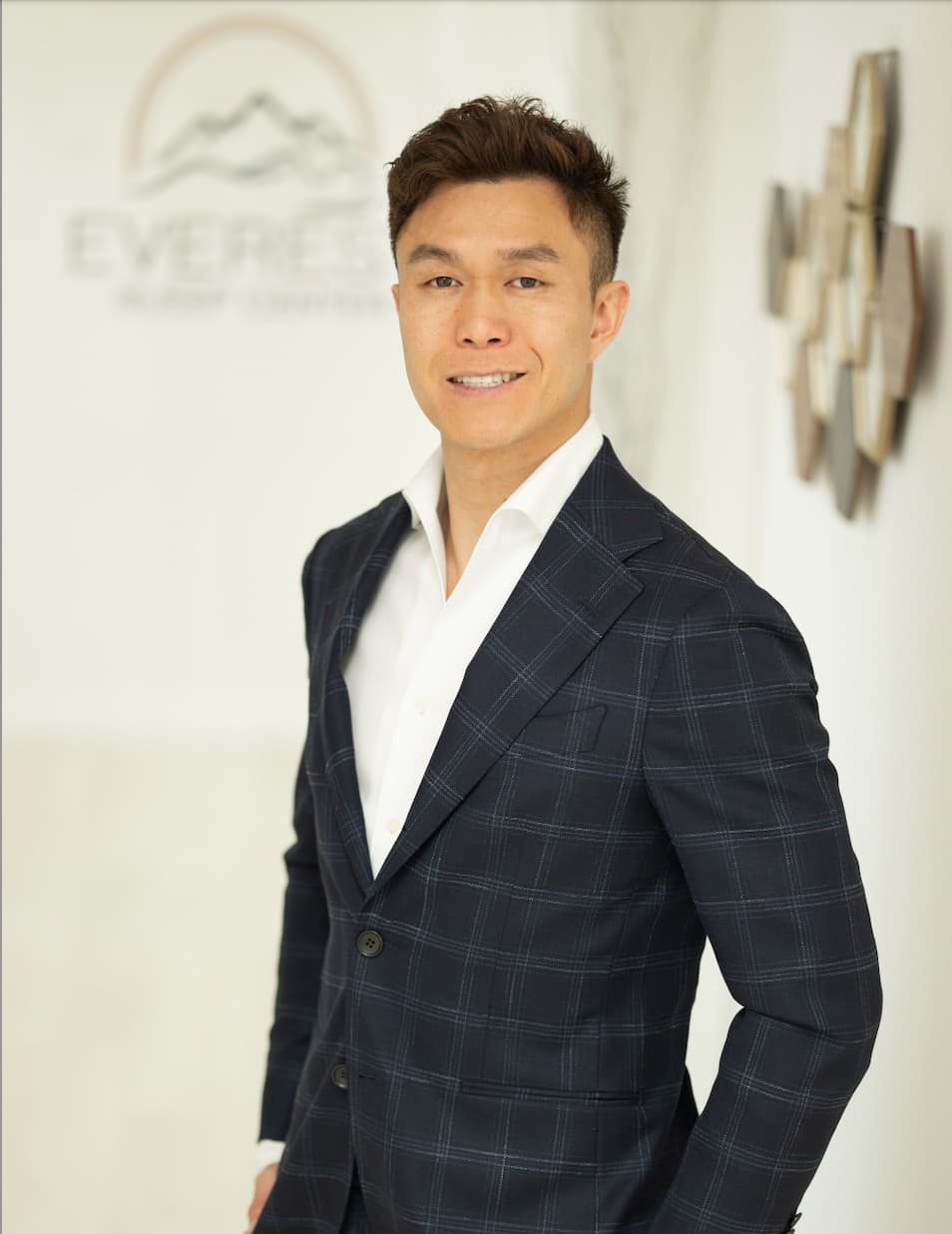
Written by the surgeonUCLA-trainedUpdated 2026-06-27
01
Am I too old for dental implants?
No. There is no upper age limit on dental implants, and the evidence backs that up, the ADA reports a 90 to 95% success rate over 10 years across age groups, and implant survival in patients over 70 tracks closely with younger adults when the medical picture is controlled. I want to say that plainly because it’s the first thing almost every older patient asks me, and I place implants in patients in their 70s and 80s all the time. Your age is not what decides this, your medications, the bone on your scan, and your ability to keep the site clean are.
My own dad taught me this. He worked his whole life as an immigrant and never left San Jose, until I took him to see the giant sequoias in his sixties, his first time out of the city. He was proud, and it stuck with me: it’s never too late to do something good for yourself, and your age isn’t what decides it.
A healthy, active 85-year-old is a better candidate than a sedentary 55-year-old with uncontrolled diabetes. I’ve had patients who spent decades in dentures walk out with a fixed bridge they forget is even there, and the same 95 to 98 percent ten-year success I see in younger adults is on the table for them. The real question isn’t your birthday. It’s whether you’re a candidate, so let me walk you through exactly what I look at.
02
What actually decides candidacy (it isn’t age)?
Three things decide whether I can place an implant for you: enough healthy bone, medical conditions that are controlled, and the capacity to keep the implant clean for the long haul. I assess all three at your consult before I recommend surgery, here is how I weigh each one.
Bone quality and quantity. Decades of tooth loss often means the jaw has resorbed, but that is rarely a true disqualifier. A 3D CBCT scan shows me exactly what bone is there, width, height, density, before I pick up a drill. Where it’s thin, grafting and sinus lifts rebuild the foundation. I treat implant candidacy with significant bone loss as a planning problem, not a no.
Controlled medical conditions. Diabetes, hypertension, heart disease, none of these is a barrier when it’s controlled. A well-managed diabetic with an A1c below 7.5 heals, in my experience, almost like a healthy non-smoker; here’s how I approach diabetic candidacy and the A1c thresholds that actually matter. I coordinate with your physician when needed and screen hard for medication interactions, especially blood thinners and the osteoporosis drugs I cover below.
Hygiene capacity. An implant needs daily home care and twice-yearly professional cleanings to keep the seal around it healthy. For a patient with significant cognitive decline or limited hand dexterity, I want a caregiver who can help with that hygiene. I’d rather have an honest conversation about it at the consult than place an implant that won’t be maintained. If you want the full medical screen I run on everyone, it lives on my dental implant candidacy guide.
03
Can I get implants on blood thinners or osteoporosis medication?
Usually yes, with planning. Most blood thinners can be managed around implant surgery without stopping them entirely, and the great majority of patients on oral osteoporosis medication have implants successfully. The two things I never do are guess at your hold protocol or adjust your medication without your prescribing physician. This is the coordination work that protects an older patient.
Blood thinners. Coumadin (warfarin), Eliquis, Xarelto, Plavix, all can be worked around. I coordinate the hold protocol directly with your cardiologist, and most patients do not need to stop the medication completely.
Bisphosphonates and osteoporosis drugs. Oral bisphosphonates (Fosamax, Actonel) are generally safe for implants. These medications reduce blood flow inside the bone, which is exactly the problem my UV-activated implants help solve, they restore circulation to the site so it can integrate. IV bisphosphonates (Zometa, Aredia) used in cancer care are a stronger concern, and there I plan timing with your oncologist. For the full picture, I wrote up implants with osteoporosis and bisphosphonates.
Cardiac conditions. Most are not a barrier. I pre-medicate with antibiotics for prosthetic heart valves, recent endocarditis, or the specific conditions the AHA protocol names. Pacemakers and stents do not affect implant surgery at all.
04
Why do my implants take in older bone?
Older bone has a real biological disadvantage, less blood supply and more brittle, calcium-heavy structure, and blood is what carries the stem cells, healing factors, and infection-fighting white cells an implant needs to integrate. My answer to that is to put the blood supply back. It’s the single biggest reason I can treat patients other offices turn away on age alone.
I pair UV photofunctionalization of the implant surface, which restores its ability to bond to bone, with platelet-rich plasma (PRP) drawn from your own blood, packed right at the site. The research my professor at UCLA published on UV-activated implants showed roughly 50 to 100 percent more bone-to-implant contact. More blood, more bone contact, a stronger infection response, that’s what makes an older patient’s site heal more like a younger one. It is probably my best technology, and it’s why I can work with diabetes, prior radiation, the thinner bone that comes with age, and the same blood-supply problem behind placing implants for patients who smoke.
One practical consequence: because I use your own blood for the PRP, a healthy body means healthy blood to build with. That’s why I ask older patients to come to surgery prepared.
05
How do I get my body ready for implant surgery?
The single behavior that most predicts a smooth result is self-care in the month before surgery, and vitamin D leads my list. If you’re not already supplementing, I start older patients on roughly 5,000 IU about a month out, alongside the rest of a pre-op checklist. The research links adequate vitamin D to better healing and lower early-failure rates, I frame it as support for healing, never a guarantee.
It matters here for a concrete reason: the surgery uses your own blood for the PRP, so the healthier your body going in, the better the blood I have to work with. Calcium, vitamin C, staying away from heavy alcohol, and actually checking off the pre-op list, those small things, done a month ahead, are where longevity really begins. I’ve seen the difference between the patient who follows the checklist and the one who doesn’t, and it shows up in the bone.
Will the surgery be harder at my age? In a healthy patient, recovery is similar to any age. I use IV sedation, monitor continuously, and adjust pain medication for kidney and liver function, which matters more in older patients. Honestly, I have not had a senior patient unable to tolerate the procedure in years. If you’re weighing this against staying in dentures, my dentures-versus-implants comparison lays out the day-to-day difference for long-term denture wearers.
06
Will my implants last the rest of my life?
For an older patient, the goal is durability you won’t have to revisit, and that is very achievable. What determines whether an implant holds for decades isn’t luck; it’s keeping the gum seal healthy and keeping your bite balanced over time. Both are things I manage for you on a maintenance schedule, not things you have to get right alone.
Once an implant integrates, the thing most likely to cost it bone years later is force in the wrong direction. Your bite shifts as teeth wear, so at your maintenance visits I do occlusal adjustments, I read the contact points and take the side-to-side load off the implant, almost like rotating the wheels on a car. Force straight down the implant it can take all day; side-to-side shaking is what drives bone loss. That, plus a band of hard keratinized tissue sealing the collar against bacteria, is what makes an implant last.
That maintenance is also how the warranty works. At 5D Smiles your implant carries a 10-year biological warranty covering bone integration and peri-implantitis, as long as you keep your twice-yearly hygiene with me, I warranty the biology, the part that actually decides longevity. I don’t, and no honest practice should, promise a “lifetime implant warranty.” And in the rare case an implant doesn’t take, on the order of 1 in 100 to 300, I replace it within a month or two, which is exactly what the warranty is for. If you want the long view, I wrote how long dental implants last.
07
What should I bring to my consult?
Bring a list of your current medications, your physician’s contact information if you manage several conditions, any prior dental records or imaging, and, if it helps, a family member or friend for a second set of ears. That medication list is the most important thing you can hand me; it’s where candidacy for an older patient is really decided.
The consult is 45 minutes with me, a 3D CBCT scan, and an itemized written treatment plan you keep, applied to your treatment when you book. I’ll show you your own scan and tell you honestly whether you’re a candidate. If your question is about paying for it, Medicare, Medicare Advantage, and 0% APR financing, I keep all of that on a separate page so this one can stay about your health: what dental implants cost for seniors.
References
- Implants. American Dental Association (MouthHealthy).
- How far can we go? A 20-year meta-analysis of dental implant survival rates.. PubMed Central (NIH).
- What Are Dental Implants?. American Academy of Implant Dentistry.
Written by Dr. Henry Qiu, DDS. Sources are peer-reviewed studies and recognized health authorities.
Keep reading
More from the surgeon's notes.
Am I a Candidate for Dental Implants?
The full medical screen I run on every patient.
Read moreWhat Do Implants Cost for Seniors?
Medicare, Medicare Advantage, and 0% APR financing.
Read moreImplants with Osteoporosis
Bisphosphonates, bone density, and how I plan around them.
Read moreImplants with Diabetes
A1c thresholds and how UV-activated implants help.
Read more