
Patient Story · All-on-6 · Downey, CA
Twelve months ago
she stopped smiling in photos.
I gave her a full upper arch on six implants. This is her year, in pictures.
Editorial composite, see note at page foot.
The Short Version
Full-arch fixed bridges survive at roughly 88 to 100% over 5 to 10 years when they’re placed and maintained right, and this is one composite All-on-6 journey from my Downey practice that shows what that looks like: a woman in her late fifties, turned away by two offices and quoted All-on-4 by a third, who left with a full fixed upper arch on six implants twelve months later. I place six implants, not four, for a reason, six gives me cross-arch stabilization with no cantilever, so the back of the bridge is braced instead of hanging. Total cost was $20,000, all-inclusive, covered by my 10-year biological warranty. This case is one chapter of our full guide to dental implants; if you are weighing your own options, start with the All-on-4 vs All-on-6 decision and how full-mouth dental implants work, then come back and follow this one in pictures.
Before
Why was she told she wasn’t a candidate?
She came to me in her late fifties after ten years of slowly losing teeth. Two offices had turned her away, diabetic, thin posterior bone, “not a candidate.” A third quoted All-on-4 and called it the same thing. The truth is most of what those offices were missing wasn’t her biology. It was technology and willingness. With a CBCT, targeted grafting, and the blood-flow boost I get from UV-activated implants, a controlled diabetic is, in my hands, close to a routine case.
The Consultation
Can a diabetic with thin bone still get a full arch?
I read her cone-beam scan with her in the room. Without a 3D scan you’re placing implants blindfolded, and I never want a surgeon blindfolded, it tells me exactly how deep and how wide an implant I can place, and where to stay 2 to 3 mm off her nerve. Posterior bone adequate for six implants with targeted grafting, anterior bone intact. Her A1C was 7.4, and a well-controlled diabetic under about 7.5 behaves, in my experience, almost like a non-smoker. (For where the thresholds actually sit, I wrote implants with diabetes and the A1C numbers that matter.) All-on-6 upper arch. $20,000, all-inclusive. Written before she walked out.
The Procedure
Why six implants instead of four?
An All-on-4 is a table on four legs, lose one and the whole table starts to shake. Six implants give me cross-arch stabilization: the fixtures brace each other in three dimensions, and I can put an implant at the very back of the arch so there’s no cantilever , no length of bridge hanging past the last implant, levering force onto it. Under her zirconia I set a titanium bar: it splints every implant together and stops a crack from ever crossing the bridge, like a roll bar on a race car. That is the whole reason I almost never place four. If you’re comparing designs, here’s how long All-on-4 actually lasts and real All-on-4 before-and-after cases.
1 · Placement
Four hours under IV sedation. Six titanium implants. Same-day fixed arch. Home by 1 p.m.
2 · Week 1
Soft food by day 4. Off prescription pain meds by day 2. Her own platelets carrying growth factors to the surgical sites.
3 · Week 12
Integration verified on CBCT. Final monolithic zirconia delivered. She ate an apple that night.
In Her Words · 12 Months Post-op
“Eating an apple again was the part that made me cry.”
Maria R. · Downey, CA · 12 Months Post-op · Composite
The Case, In Numbers
What did her All-on-6 cost, and how is it holding up?
$20,000
all-inclusive case cost
~$292/mo
0% APR · 60 months · after PPO, qualified
6
implants placed
12 mo
follow-up complete
10 yr
biological warranty
Six titanium implants, IV sedation, atraumatic extractions, PRP-enriched autograft at posterior sites, same-day fixed arch, final monolithic zirconia over a titanium bar. PPO contribution $2,500. At her twelve-month follow-up her bone levels were stable on CBCT with no complications recorded over that window, which is what I expect, not a promise: a 2014 systematic review in the Journal of Dentistry reported 87.89 to 100% implant survival for full-arch fixed bridges over 5 to 10 years, and the ADA puts implant success at 90 to 95% over ten years when protocols are followed.
The way I hold a case to the top of that range is maintenance: yearly CBCT, cleanings and probings, and an occlusal adjustment so the bite stays balanced as her teeth wear, almost like rotating the wheels on a car. That maintenance is what backs the Vampire Implants™ 10-year biological warranty: I warranty the biology, the seal and the bone, because my UV-activated implants and LANAP laser are what let me stand behind it. (It is a 10-year biological warranty, not a “lifetime implant warranty”, no honest practice should claim that.) When you’re ready to compare the math, here’s what a full arch really costs per arch.
Take 2 minutes
Get the same second opinion Maria got.
Tell us about your case and Dr. Qiu personally reviews it within one business day. Written treatment plan, transparent pricing.
Or call (562) 923-4538
Looking for something else?
Other ways we can help.
One surgeon, and a full range of treatments. Pick the path that fits your goal.
 From $3,500
Dental Implants
Fixed tooth replacement. Single tooth to full arch.
Explore Custom pricing
Cosmetic Dentistry
Whitening, smile design, makeover. 1,000+ smiles transformed.
Explore From $1,800 / tooth
Veneers
Fix your smile in two visits. Digital smile preview.
Explore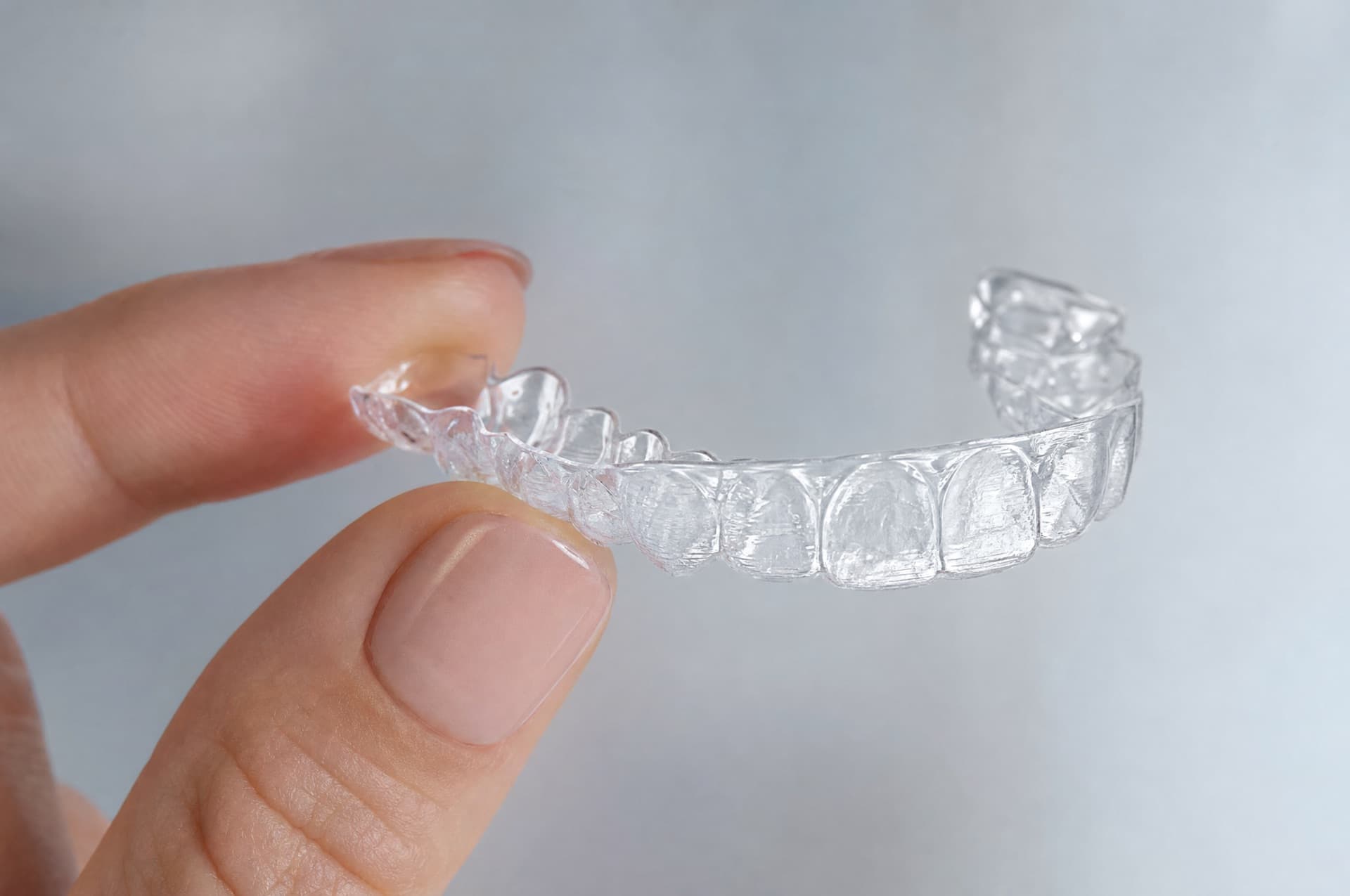 From $4,500
Invisalign
Straight teeth in 6–18 months. Nobody has to know.
Explore

Your Implant Dentist
The doctor in the room is the one who does everything.
When you book a consult, you're not meeting a sales coordinator. You're meeting me. I'll personally read your CBCT, draft your treatment plan, and quote your exact price, start to finish.
Dr. Henry Qiu, DDS
UCLA Trained · DIO Implant Faculty & Instructor
Editorial composite case study representing common outcomes across our full-arch patient population in Downey. Patient name, age, identifying details, and accompanying images are editorial composites, not photographs of a single identified patient. The clinical journey, timeline, and outcomes reflect documented patterns across our practice and are illustrative, not a guarantee of any individual result.
References
- Systematic review of short- (5-10 years) and long-term (10 years or more) survival and success of full-arch fixed dental hybrid prostheses and supporting implants.. PubMed (NIH).
- Implants. American Dental Association (MouthHealthy).
Written by Dr. Henry Qiu, DDS. Sources are peer-reviewed studies and recognized health authorities.