
Material Comparison · Downey, CA
Both work.
Here’s how to pick.
I place both. Titanium for the longest record and lower price; zirconia if you’re metal-sensitive or in the smile zone. Tell me your case and I’ll tell you which one.
Who picks what
Most pick titanium. A few should pick zirconia.
Here is the short version. Choose titanium when you want the longest track record and the lower price; choose zirconia when you are metal-sensitive, want a fully metal-free mouth, or have thin gum tissue in the smile zone where grey could show through. Picking the material is just engineering. A Porsche uses the right metal in the right place, and I pick titanium or zirconia the same way, the right one for your case. Both reach 95%+ survival at ten years in my hands. If you are still deciding what zirconia even is, start with what zirconia implants are and who they suit; if you are weighing implants against other tooth-replacement options entirely, I compare implants versus dentures and implants versus a bridge on their own pages.
If you want the proven track record.
Fifty-plus years of placed implants, and the peer-reviewed studies report about 97% survival in healthy non-smokers at the ten-year mark. The size and angulation library is wider, the prosthetic system is two-piece (more room to maneuver in a tough case), and the price runs about a thousand dollars per tooth lower. In nine of every ten cases I sit down with, this is the call, and if you want the long-horizon view, I wrote out how long a dental implant really lasts. One note: this whole comparison is about full-size implants that carry a bite. If your only goal is to stop a lower denture from rocking, that is a different, narrower tool, where mini implants fit is its own decision.
If you’re metal-sensitive or in the smile zone.
Roughly six in a thousand patients react to titanium on patch testing. Some have thin gum tissue up front where a grey shadow can show through. Some simply want a metal-free mouth. Zirconia is white all the way through, same osseointegration, same 10-year biological warranty. It is one of several material types of dental implants I place, and the right call for the case that calls for it.
Across 2,000+ implants I’ve placed at 5D Smiles, the mix runs about 78% titanium, 22% zirconia.
What’s the same
Same protocol. Same blood. Same surgeon.
Whichever material you pick, the surgery looks identical. I draw a small vial of your blood at the start, spin it down to platelet-rich plasma, and bathe the implant in your own growth factors before it ever touches bone. Both materials are UV-activated chairside by the surface science Dr. Ogawa, my professor at UCLA, pioneered, UCLA research shows 50 to 100% more bone-to-implant contact on a photofunctionalized surface. Both are backed by my 10-year biological warranty. The choice between zirconia and titanium changes the material. It does not change the healing , or the 95 to 98% ten-year success rate I plan every implant to hit.
The Vampire Implants™ Protocol · Dr. Qiu uses this on every implant.

What’s different
Three differences. That’s it.
Both materials integrate by the same mechanism and reach the same final bone-to-implant contact, a 2023 meta-analysis of 4,017 zirconia implants puts 10-year survival at 95.1%, right alongside titanium, and both are backed for ten years. Here are the three things that actually differ.
Material
Metal. Or ceramic.
Titanium is a precision-machined biocompatible metal alloy. Zirconia is a high-strength ceramic. Both have decades of medical use. Both are biologically inert.
Color
Grey can show. White doesn’t.
Titanium is metal-grey beneath the gum. In thin anterior tissue, it can faintly show through. Zirconia is white throughout, no shadow, ever.
Integration time
Ten weeks. Or fourteen.
Titanium typically integrates in 10–12 weeks; zirconia in 12–14. Both reach the same final bone bond. Zirconia is the slightly more patient material.
Side by side
Titanium vs. zirconia, compared
The honest trade-off on the five axes that decide the material. Figures below are at my Downey practice against the published data; your case names the material on day one.
| What matters | Titanium | Zirconia |
|---|---|---|
| Cost | Lower, a single-tooth case starts at $3,500 all-inclusive. | About $9,500 all-inclusive, roughly $6,000 over the $3,500 titanium case. |
| Longevity | 95–98% survival at 10 years on a 50-plus-year clinical record. | 95.1% survival at 10 years in a 2023 meta-analysis of 4,017 implants. |
| Bone bond & recovery | Osseointegrates in about 10–12 weeks. | Same mechanism, about 12–14 weeks; final bone contact essentially identical. |
| Esthetics & sensitivity | Metal-grey under the gum; can faintly show through thin front tissue. | White throughout, no grey show-through; metal-free for the ~0.6% who are sensitive. |
| The honest trade-off | My default in about nine of ten cases, longest record, lower price, two-piece flexibility. | The right call for metal sensitivity, a thin smile-zone biotype, or a fully metal-free goal. |
Zirconia survival from a 2023 meta-analysis of 4,017 zirconia implants; titanium survival from the AAID. Both carry my 10-year biological warranty. Which I pick, and the one-sentence reason, is in the doctor’s call below.
For a full arch
Should a full-arch bridge be zirconia or titanium?
For a single tooth, either material is a fine choice. For a full arch, my answer is firmer: I build the bridge from high-grade zirconia over a titanium bar core. You get the white esthetics of zirconia and the toughness of titanium underneath, the best of both, not a choice between them.
Here is the reasoning I give every full-arch patient. Zirconia on its own is brittle, like a crystal, a crack can run straight through and split the whole bridge. A titanium bar stops that crack before it crosses, dampens the vibration of chewing like a roll bar in a race car, and splints every implant to every other so the load is shared.
I would never place a full arch without one, and I always set an implant at the very back of the arch rather than letting the bridge hang past the last fixture on a cantilever, an unsupported overhang acts like a lever and drives bone loss onto the nearest implant fast. If you are deciding between four implants and six, I lay the whole trade-off out in All-on-4 versus All-on-6, and how long the result lasts comes down to the mechanics, not the brand name on the box. When the upper jaw has too little bone left to anchor any conventional full arch, the material question gives way to an anchorage one, that is where cheekbone-anchored zygomatic implants come in.
There is one quirk of zirconia worth knowing on any case. Zirconia does not wear, but your natural teeth do, so over the years a zirconia crown can end up sitting taller than the teeth around it, hit first, and concentrate the whole bite onto that one implant. That is a leading cause of an implant that was fine for years suddenly losing bone, and it is almost entirely preventable: I rebalance your bite at maintenance, the way you’d rotate the tires on a car. It is one of the biggest levers in preventing implant failure over a 10-year horizon, and it is exactly the kind of upkeep my 10-year biological warranty is built around.
The doctor’s call
“In nine of ten cases I default to titanium. The tenth is zirconia, and when it’s zirconia, it’s the right call for a reason I can tell you in one sentence.”
Dr. Henry Qiu, DDS · UCLA-trained · 2,000+ implants placed across both materials
5-Year Biological Warranty
We back the biology, bone, healing, and the redo.
Zirconia teeth covered for life. Implant hardware covered 5 years. Bone healing covered a minimum of 1 year, up to 5 years for healthy non-smokers. Surgery, parts, and lab included on every covered redo.
Healing warranty term (1–5 yrs) is set by your HbA1c and smoking status at placement per our written warranty grid. Requires twice-yearly care at 5D Smiles to remain active. Not a guarantee of treatment outcome. Full written warranty provided at consultation.
Questions patients actually ask
Zirconia or titanium, answered straight.
Which is better, zirconia or titanium implants?
Neither is universally better. Both reach 95–98% 10-year survival when placed correctly. Titanium has a 50-plus-year track record, two-piece prosthetic flexibility, and a lower cost; zirconia is metal-free, fully white (no grey show-through), and the right call for the small subset of patients with documented metal sensitivity or a thin anterior gum biotype. I place both at 5D Smiles, and the choice depends on your case, not a blanket rule. What I actually care about either way is the keratinized seal around the implant, that is what locks bacteria out and keeps the bone stable, and it forms the same way on both materials.
Is titanium safe? I’ve read about “titanium toxicity.”
Yes. Titanium has been used in medical implants since the 1960s, orthopedic joints, pacemaker housings, dental implants. The published systemic toxicity data is essentially zero in patients without confirmed metal sensitivity. A small share of patients, on the order of 0.6%, have a documented titanium or nickel hypersensitivity that can show up as peri-implant inflammation; for those patients I recommend zirconia. For everyone else, titanium is as biologically inert as any material in modern medicine.
Why is zirconia more expensive than titanium?
Three reasons. The raw material costs more than titanium. The machining tolerances are tighter, because zirconia is brittle and the implant geometry has to be cut more precisely. And the systems are mostly one-piece, so every length and angulation has to be stocked separately. In practice, a single zirconia implant runs about $9,500 all-inclusive, roughly $6,000 more than a single titanium implant case, which starts at $3,500 with us.
Does zirconia integrate with bone the same way titanium does?
Yes, by the same osseointegration mechanism, where living bone grows directly onto the implant surface with no soft tissue in between. Zirconia takes about two extra weeks to integrate (roughly 12–14 weeks versus 10–12 for titanium), but the final bone-to-implant contact is essentially identical. Both materials get my Vampire Implants™ Protocol, UV photofunctionalization plus platelet-rich plasma from your own blood, which is what pushes that bone contact to the top of the range on either one.
Can I get zirconia for an All-on-6 full arch?
Technically yes, but for a full arch I recommend titanium in most cases, and here is the honest mechanical reason. A full arch takes more cumulative chewing force than any single tooth, and I build every full arch around a titanium bar core under the zirconia bridge, that bar stops a crack from crossing the bridge, dampens vibration, and splints all the implants together so force is shared. An all-zirconia arch gives up that titanium core. The six-implant geometry under heavy posterior load is exactly where titanium’s flex tolerance matters most.
Will a zirconia crown wear down my natural teeth, or vice versa?
This is the one I most want patients to understand. Zirconia does not wear, but your natural teeth do. Over years, a zirconia crown can end up sitting taller than the worn teeth around it, so it hits first and concentrates the whole bite’s force onto that one implant, and an implant that takes side-to-side force loses bone. The fix is simple and routine: I rebalance your bite at maintenance visits, almost like rotating the tires on a car, so the load stays straight down the implant where bone can handle it.
What about MELISA testing for a titanium allergy?
MELISA (memory lymphocyte immunostimulation assay) is a blood test for delayed-type metal hypersensitivity. It is the most-cited titanium-sensitivity diagnostic, but the literature on it is mixed and false positives are common. I order it when there is a real history, nickel-jewelry reactions, a prior implant that failed for no clear reason, persistent peri-implantitis, and I treat the result as one input into the material decision, not the whole decision.
Can I switch from titanium to zirconia later?
Yes, but it is real surgery: the existing implant has to come out, the site has to heal for roughly 3–4 months, and a new implant goes in. Removing a fully integrated titanium implant is not trivial and you lose a little bone doing it. I do not recommend electively switching, we pick the right material the first time. If you are genuinely torn, we walk the trade-offs at your consult so you commit to a decision you can live with.
Will my insurance cover one material but not the other?
Insurance usually does not distinguish between titanium and zirconia, most PPO plans cover “dental implant” as a single benefit, commonly capped around $1,000–$2,000 per implant. If a plan does specify, it is typically a flat dollar amount you can apply to either material. Your consult includes a benefits check so you know exactly what your plan covers before we start.
Talk to Dr. Qiu
Get the material call, in writing, same visit.
Forty-five minutes with the surgeon, not a coordinator. 3D scan included. Your plan names the material and explains why. No deposit to book.
Sign up to get your free guide + book your free consult
Step 1 of 3
Which procedure are you signing up for?
Free guide by text · 30-min consultation · No deposit · Verified by SMS in 20 seconds
Looking for something else?
Other ways we can help.
One surgeon, and a full range of treatments. Pick the path that fits your goal.
 Starts at $20,000 / arch
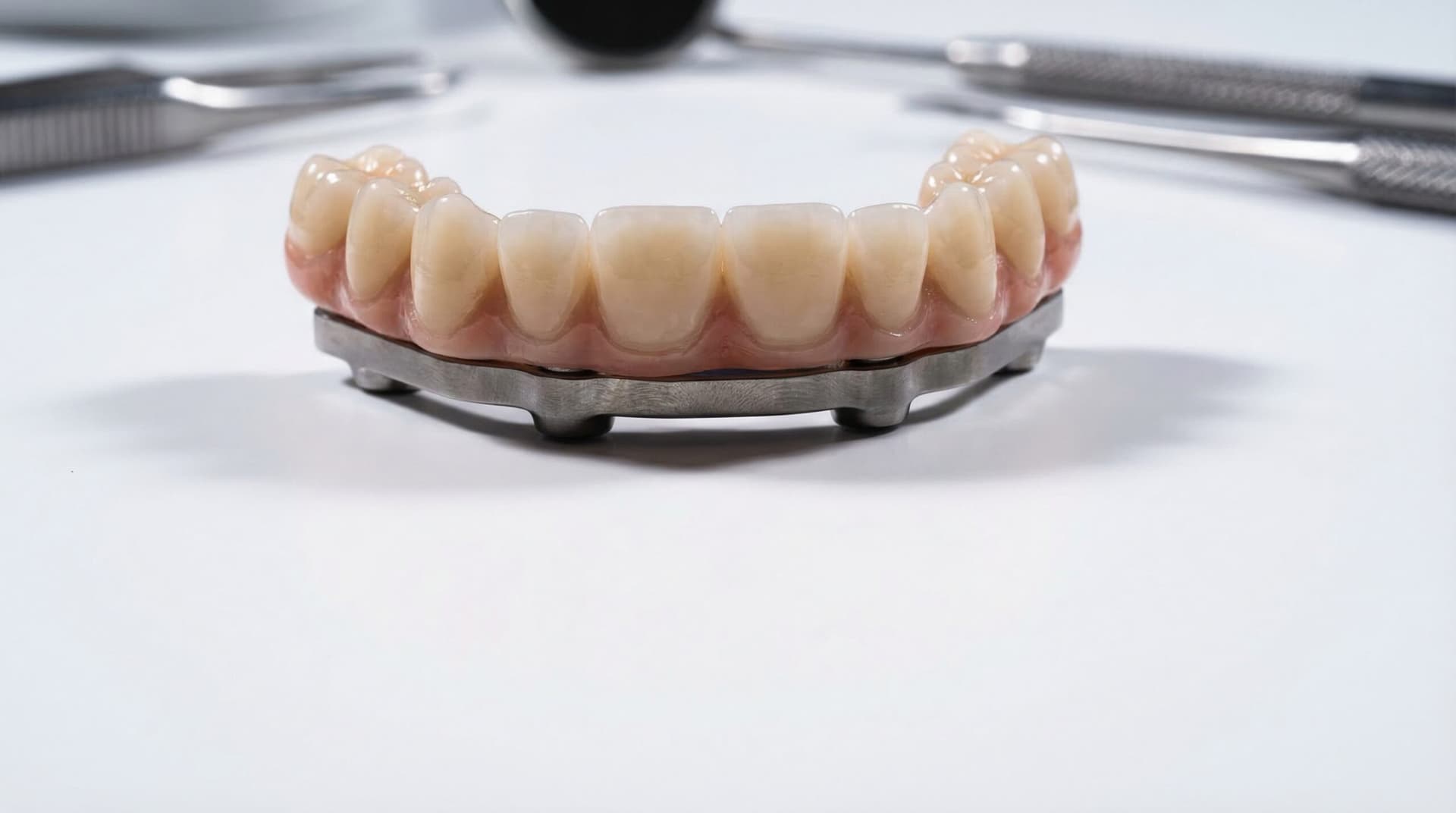
All-on-6 · Permanent Teeth in a Day
Walk in. Walk out smiling. Six implants, not four, built to outlast a single failure.
Explore Custom pricing
Cosmetic Dentistry
Whitening, smile design, makeover. 1,000+ smiles transformed.
Explore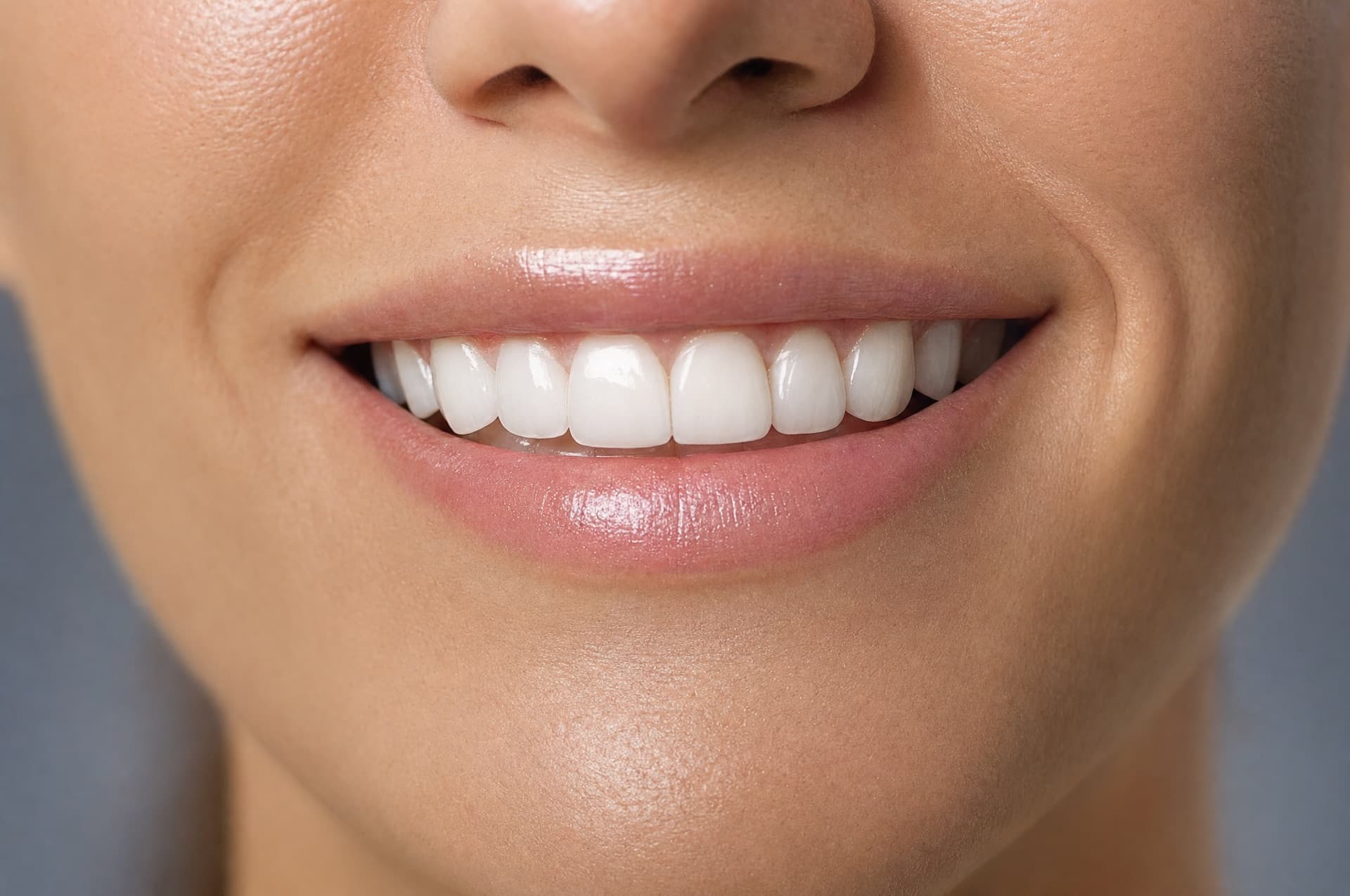 From $1,800 / tooth
Veneers
Fix your smile in two visits. Digital smile preview.
Explore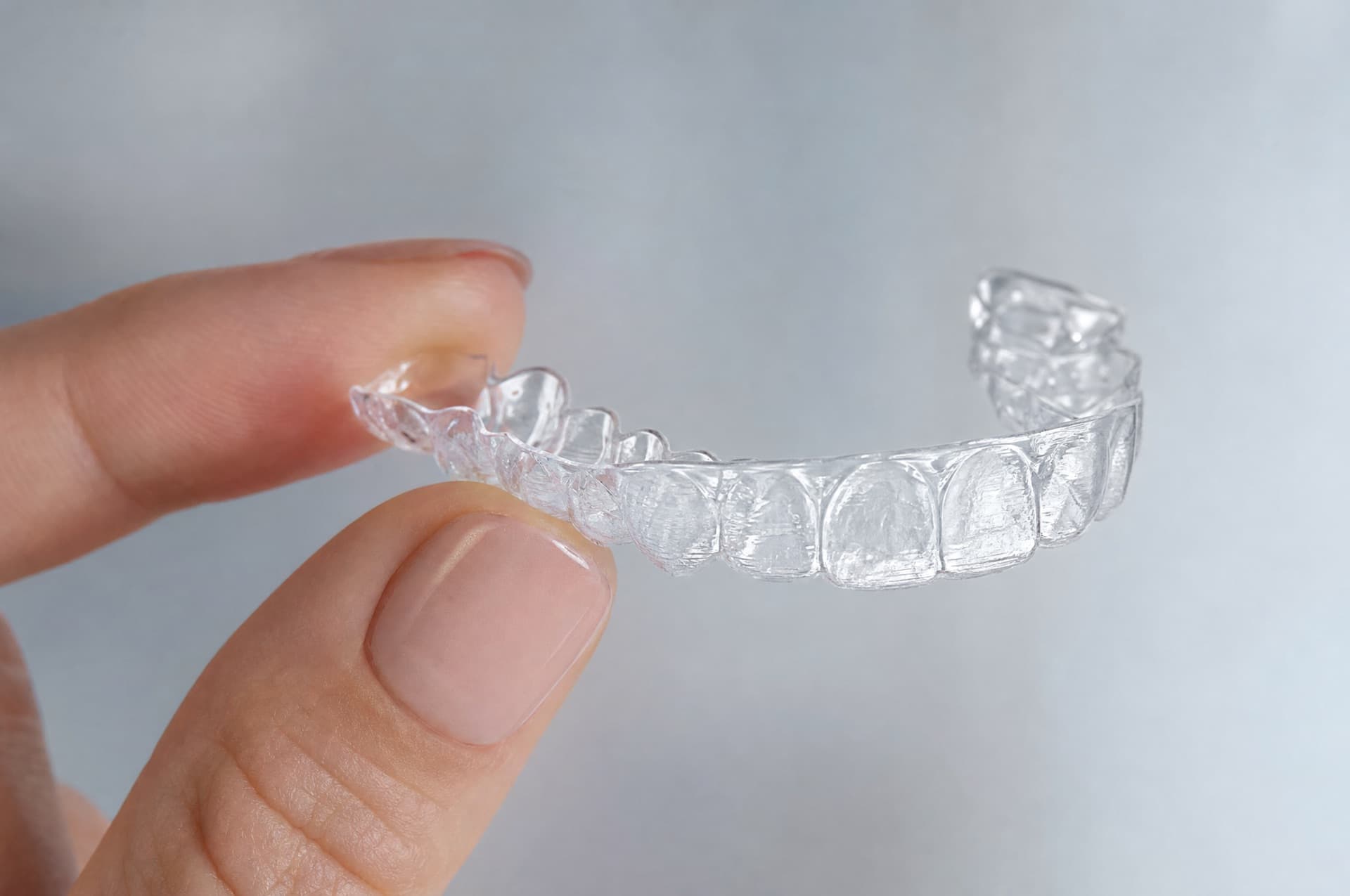 From $4,500
Invisalign
Straight teeth in 6–18 months. Nobody has to know.
Explore

Your Implant Dentist
The doctor in the room is the one who does everything.
When you book a consult, you're not meeting a sales coordinator. You're meeting me. I'll personally read your CBCT, draft your treatment plan, and quote your exact price, start to finish.
Dr. Henry Qiu, DDS
UCLA Trained · DIO Implant Faculty & Instructor
References
- Clinical outcomes of zirconia implants: a systematic review and meta-analysis.. PubMed Central (NIH).
- Smoking and dental implants: A systematic review and meta-analysis.. PubMed (NIH).
- Titanium Allergy Caused by Dental Implants: A Systematic Literature Review and Case Report.. PubMed Central (NIH).
- What Are Dental Implants?. American Academy of Implant Dentistry.
Written by Dr. Henry Qiu, DDS. Sources are peer-reviewed studies and recognized health authorities.