
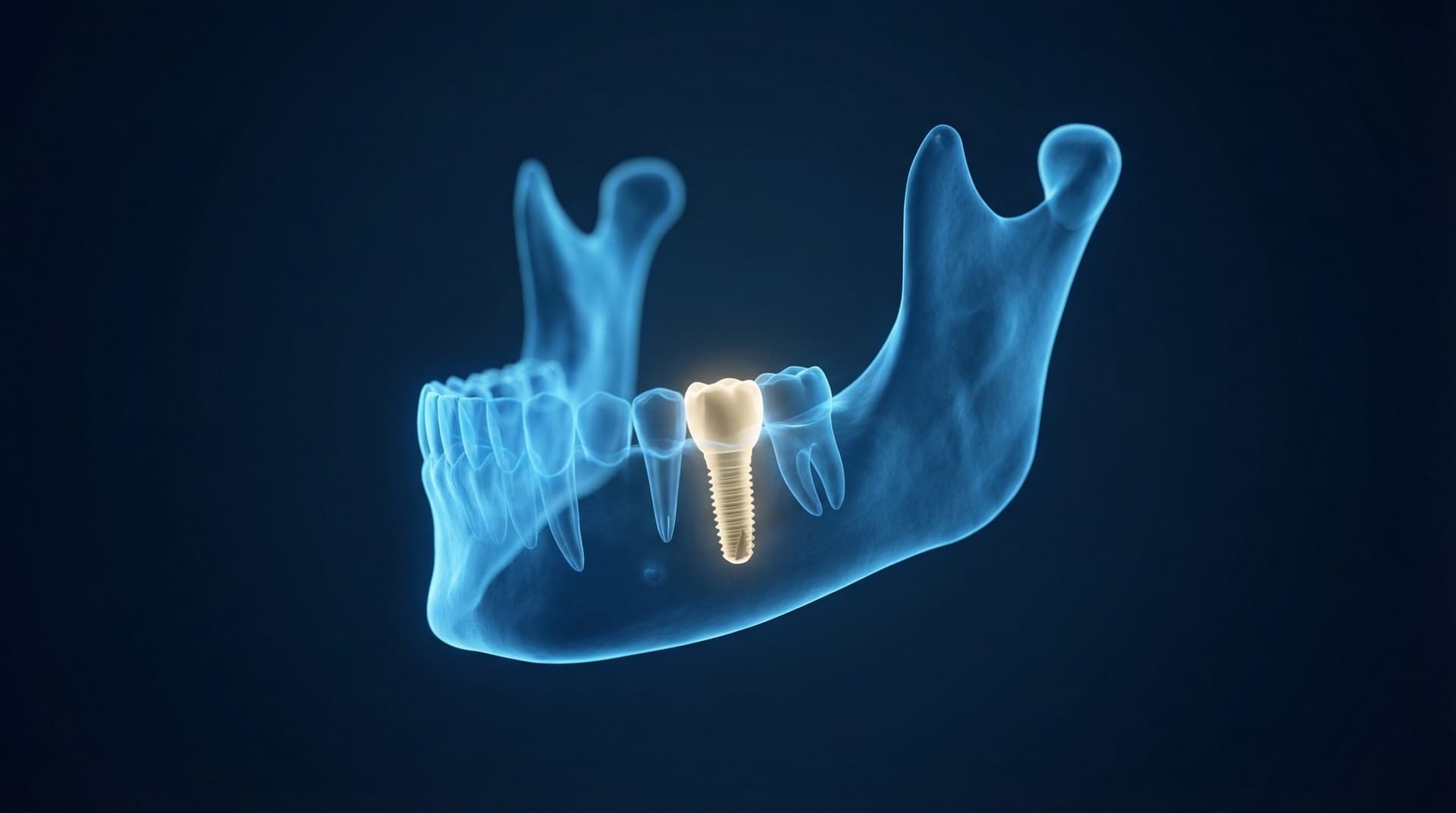
Material Comparison
Both work.
Here’s how to pick.
Titanium has a 50-year track record and 97% 10-year survival. Zirconia is metal-free and a better esthetic match in thin-biotype anterior cases. We place both at 5D Smiles — and we’ll tell you which one fits your case on day one.
- 4.9 Google Rating
- UCLA-Trained
- Lifetime Zirconia Warranty
Side By Side
Six factors. Two materials. One honest comparison.
Across roughly 1,200 implants placed at 5D Smiles, about 78% have been titanium and 22% zirconia. Here’s the decision matrix we actually use in the consult room.
| Factor | Titanium | Zirconia |
|---|---|---|
| Osseointegration | 10–12 weeks. Surface-treated SLA / SLActive titanium reaches 95% bone-to-implant contact reliably. | 12–14 weeks. Slightly slower start, equivalent final BIC. Roughly 2 weeks longer to functional load. |
| 10-year survival | 95–98% across published cohorts. 50+ years of clinical data. | 92–96% in published cohorts. Strong 10-year data, evolving 15-year and 20-year data. |
| Esthetics | Grey metal body. Can show through thin biotype gum tissue in the anterior — visible as a faint grey halo. | Tooth-white all the way through. No grey show-through, ever. The clear winner in anterior esthetic-zone cases with thin biotype. |
| Metal sensitivity | Roughly 0.6% of patients have titanium or trace-nickel sensitivity. For those patients, persistent peri-implant inflammation can occur. | Fully metal-free. The right call for patients with documented MELISA-positive titanium sensitivity or strong metal-free preference. |
| Prosthetic flexibility | Two-piece system. Abutment angle is adjustable independently of implant angle. Better in cases where bone forces an awkward implant trajectory. | Mostly one-piece. Abutment is fused to implant. Less correction available if the bone trajectory and prosthetic emergence don’t align. |
| Cost (single tooth, all-inclusive) | From $3,500. Includes consult, CBCT, surgery, implant, abutment, and final zirconia crown. | From $4,300–$4,700. Same all-inclusive scope. The implant material itself is more expensive than titanium. |
Who should pick zirconia
Three reasons we’ll recommend zirconia.
About 22% of our single-tooth cases get a zirconia recommendation. These are the three patient profiles where it’s the right call.
Documented metal allergy
Roughly 0.6% of patients are sensitive to titanium or trace nickel in the implant alloy — manifesting as persistent peri-implant inflammation that doesn't respond to hygiene. If you have a confirmed metal sensitivity (positive MELISA test or documented dermatologic reaction), zirconia is the clear choice.
Thin biotype, anterior placement
Titanium implants in patients with thin gum biotype can show a faint grey shadow through the gum tissue, especially in the upper front teeth where the smile is visible. Zirconia is white all the way through — no grey show-through, ever. For anterior esthetics with a thin biotype, zirconia is the safer esthetic bet.
Metal-free preference
Some patients prefer a metal-free mouth on principle — for holistic-health reasons, electromagnetic-sensitivity claims, or personal preference. The published evidence for systemic effects of titanium implants is essentially zero, but if the metal-free preference is firm, zirconia is a legitimate alternative.
Who should pick titanium
Four reasons we’ll recommend titanium.
About 78% of our single-tooth cases get a titanium recommendation — and most full-arch cases get titanium too. Here’s the reasoning.
50-year track record
Titanium dental implants have been placed since 1965. The published 10-year survival data on modern surface-treated titanium is 95–98%. Zirconia dental implants have been on the US market since roughly 2007 — the 10-year data is solid but the 25-year data hasn't fully come in yet. For most patients, the longer track record matters.
Two-piece flexibility
Titanium implants are two-piece systems: the implant body and a separate abutment that screws on top. This lets us adjust the prosthetic angle independently of the implant angle — useful when bone forces an awkward implant trajectory but the crown needs a precise emergence. Zirconia implants are mostly one-piece, with the abutment fused to the implant. Less flexibility in tough cases.
Lower cost, broader availability
Titanium implants run $3,500 all-inclusive per single tooth at 5D Smiles; zirconia adds roughly $800–$1,200 to that. The price gap is shrinking but it's real. Titanium is also available in a far wider range of sizes and angulations, which matters for difficult anatomy where the standard sizing doesn't fit.
Posterior heavy-load cases
Molar regions take 100+ pounds of occlusal force in healthy bite patterns and more in patients who clench or grind. Titanium handles heavy load with more flex tolerance than zirconia, which is harder but more brittle. For a single molar, an All-on-6 case, or any patient with documented bruxism, titanium is the more predictable long-term answer.
Our Recommendation Matrix
How we decide in the consult room.
Anterior single tooth, thin biotype, esthetic priority: zirconia. The white implant body eliminates any grey show-through risk, and the esthetic margin in the smile zone is worth the cost premium. About 14% of our single-tooth cases.
Documented metal sensitivity or strong patient preference for metal-free: zirconia. Roughly 0.6% of patients have a confirmed titanium sensitivity; another 7% prefer metal-free on principle. We respect both.
Posterior single tooth, normal biotype: titanium. The grey show-through risk is essentially zero on posterior teeth, occlusal loads are higher, and the cost savings are real. About 41% of our single-tooth cases.
All-on-6 full-arch:titanium. The cumulative occlusal load and the prosthetic flexibility of a two-piece system both favor titanium for heavy-load full-arch cases. We’ve placed All-on-6 in zirconia 4 times — outcomes are good but it’s not our default.
Bruxism or heavy bite force:titanium. Zirconia is harder but more brittle. In patients who clench or grind, titanium’s slight flex tolerance reduces the long-term fracture risk.
If you’re still undecided after the consult,we go with titanium as the default. The longer track record and broader sizing flexibility favor titanium when esthetics and metal sensitivity aren’t driving the decision.
The workflow
Five steps. Same protocol either way. Material picked on day one.
- 01
$145 consult and 3D CBCT scan
Forty-five minutes with Dr. Qiu — not a sales coordinator. We map your bone, discuss your priorities (esthetics, metal-free preference, cost, long-term track record), and recommend the implant material that fits your case. The written plan you leave with names the material and explains the reasoning.
- 02
Material selection decision matrix
Three factors drive the call: anatomic location (anterior esthetic zone vs. posterior load-bearing), patient factors (metal sensitivity, biotype, bruxism), and cost. For about 78% of single-tooth cases the answer is titanium. For about 22% — typically anterior, thin biotype, or documented metal sensitivity — we recommend zirconia. We'll tell you which you fall into and why.
- 03
Vampire Implant placement
Both materials get the same UV photofunctionalization and PRP protocol. The implant (titanium or zirconia) is UV-activated for 12 minutes before placement; we draw your blood and concentrate the platelets; the implant is bathed in your own growth factors. The protocol accelerates integration by 30–40% on both materials.
- 04
Integration: 10–12 weeks (titanium) or 12–14 weeks (zirconia)
Zirconia integrates slightly slower because the surface is smoother and more hydrophilic-stable than titanium. We see you at week 2, 6, and 12 regardless of material. Both materials reach the same final bone-to-implant contact percentage at the end of integration — zirconia just takes about 2 extra weeks to get there.
- 05
Final monolithic zirconia crown
Both implant types receive the same final restoration: a custom-shaded monolithic zirconia crown bonded to the implant or abutment. Indistinguishable from a natural tooth. Lifetime warranty against fracture or wear. The implant material affects how the crown is attached (screwed vs. cemented) but not how it looks or feels in your mouth.
Frequently asked
About zirconia vs. titanium
- Neither is universally better. Both achieve 95–98% 10-year survival when placed correctly. Titanium has a 50-year track record, two-piece prosthetic flexibility, and a lower cost; zirconia is metal-free, fully white (no grey show-through), and the right call for the small subset of patients with documented metal sensitivity or thin anterior biotype. We place both at 5D Smiles. The right choice depends on your case, not on a blanket rule.
Take 2 minutes
The material decision is ours to make together.
Two minutes of questions, then Dr. Qiu personally reviews your case within one business day. The written plan you leave with names the material and explains the reasoning.
Or call (562) 923-4538

Your Surgeon
The doctor in the room is the one who does everything.
When you book a consult, you're not meeting a sales coordinator. You're meeting me. I'll personally read your CBCT, draft your treatment plan, and quote your exact price — start to finish.
— Dr. Henry Qiu, DDS
UCLA Implant Faculty & Instructor